

If you sell software or digital products through Stripe, Managed Payments looks like the shortest path to handing off VAT, sales tax and chargebacks. With Managed Payments, Link becomes the merchant of record for those sales, and Stripe handles tax and disputes on the Stripe account you already use.
Stripe built something real here. But there is a catch buried in the pricing.
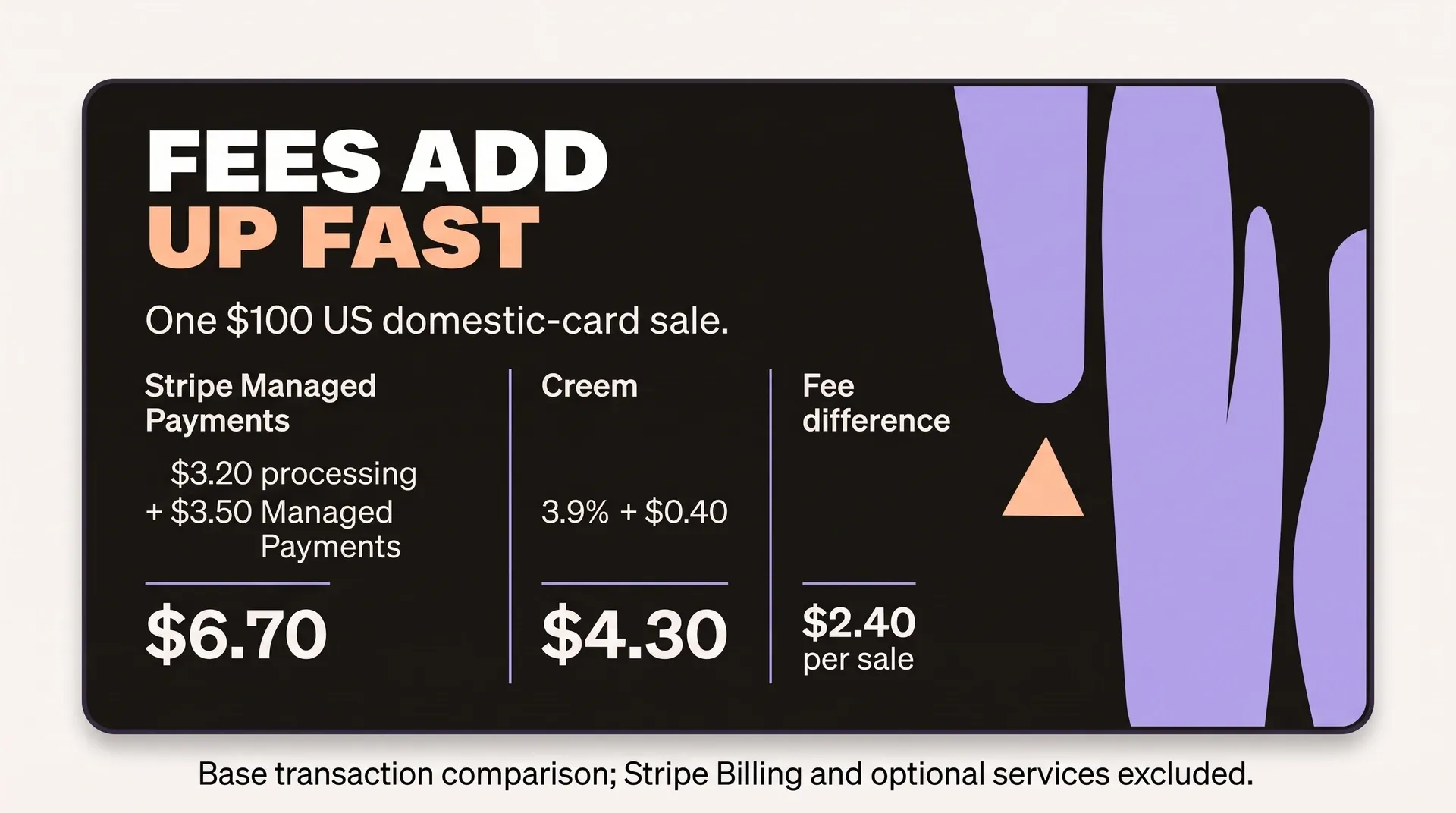
For indie hackers, bootstrapped founders and small teams, that catch is the price: a $100 domestic card sale loses $6.70 to Stripe processing plus Managed Payments, against $4.30 on Creem.
Each successful Managed Payments sale carries an extra 3.5% beyond the regular Stripe card fee. Billing and local payment methods each come with their own price.
Standalone merchants of record bundle those lines differently. Creem, which we built, sells your product to the buyer on your behalf and takes the tax, invoice and chargeback work with it. Subscriptions, usage billing, affiliates and revenue splits run from the same account.
What is Stripe Managed Payments?
Stripe offers Managed Payments as a merchant-of-record layer on top of its payment processor for software and digital-product sales. It works with Checkout, Payment Links, and Billing, so you can use it within an existing Stripe setup.
The service calculates and collects indirect taxes, including sales tax, VAT, and GST, then files and remits them in supported jurisdictions. Stripe also screens for fraud and responds to disputes.
Buyers see "Sold through Link" at checkout and Link on their statements. Link is the merchant of record for covered sales and answers payment questions. You still deliver and support the product.
Before Managed Payments, founders who wanted to avoid global sales tax paid for Stripe Tax and handled filings, hired tax counsel, or moved to a dedicated MoR.
The real cost of Stripe Managed Payments
Stripe charges an extra 3.5% for each successful Managed Payments transaction, alongside its payment processing fees. With standard US domestic-card processing priced at 2.9% plus $0.30, the combined rate is 6.4% + $0.30. A $100 purchase breaks down like this:
- Payment processing: $2.90 + $0.30 = $3.20.
- Managed Payments: 3.5% of $100 = $3.50.
- Total fees: $6.70, leaving $93.30.
Together, those fees take 6.7% of the sale. Quoting only the 3.5% surcharge leaves out $3.20 of that $6.70.
The 3.5% charge does not include separate Billing fees, and Stripe prices optional local payment methods separately too, so a subscription sale can cost more than this calculation.
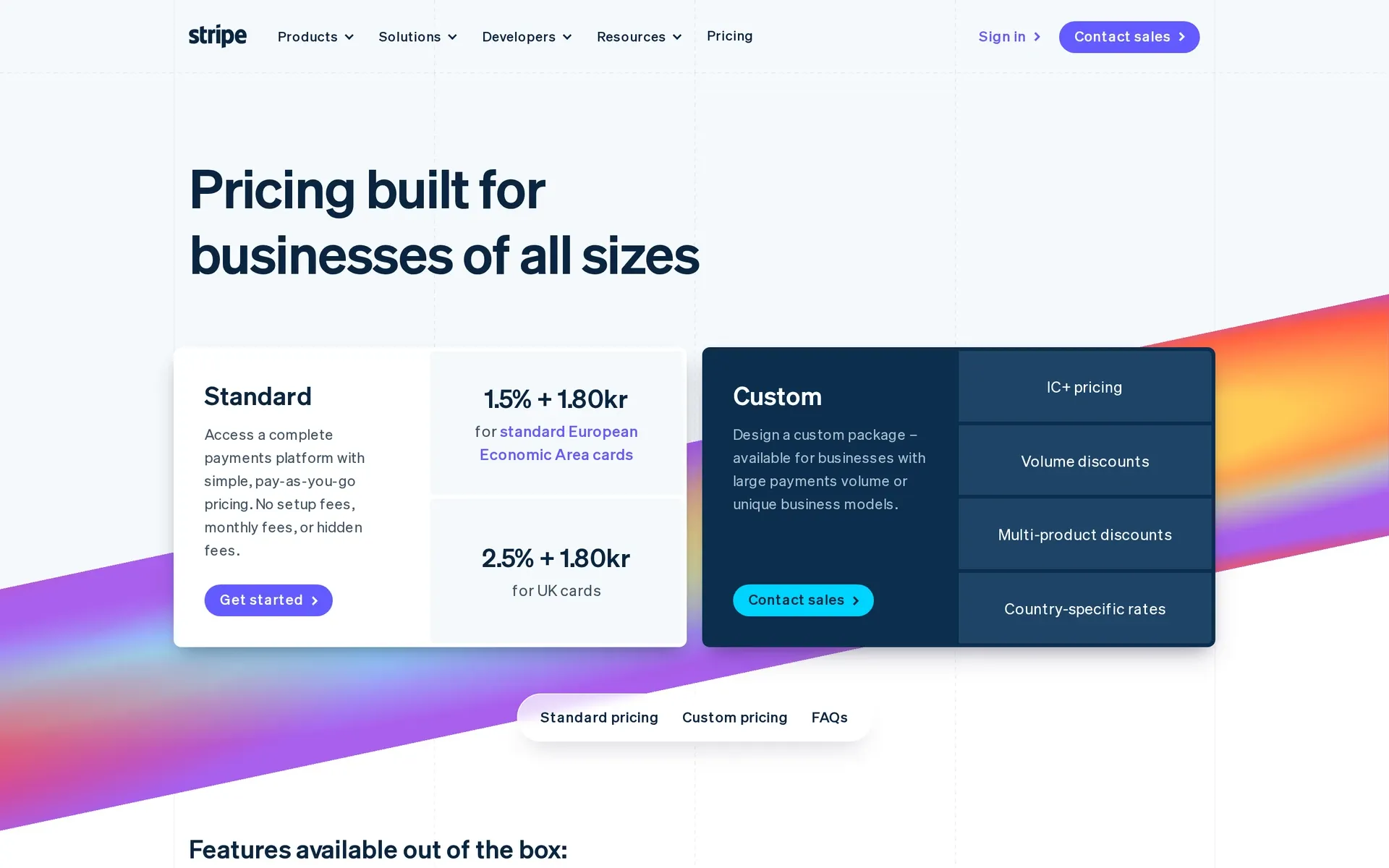
Sell to a buyer with a card issued outside the US and Stripe adds 1.5%. If the payment also needs currency conversion, Stripe adds another 1%. That takes the same $100 sale to $9.20 in fees, 8.9% + 30¢ all in.
For a $49 SaaS subscription, standard Stripe processing costs about $1.72. Adding Managed Payments brings that to about $3.44 before Billing. At 100 monthly customers, the Managed Payments surcharge adds about $171.50 each month.
At $20,000 MRR, the 3.5% surcharge adds $700 a month, or $8,400 a year, compared with plain Stripe processing.
Why Stripe charges this much
The 3.5% pays for services beyond accepting a payment. Stripe takes over tax compliance in supported jurisdictions, fraud screening, dispute responses and payment-related support via Link. That means registrations and filings you no longer handle yourself, chargebacks Stripe answers, and buyer payment questions routed away from your team.
Dedicated MoRs bundle processing and compliance into one rate. Stripe sells its platform as separate products, each with its own fee, so it adds its merchant-of-record fee to the processing bill.
My view is that the 3.5% pays for compliance infrastructure built for enterprise software, and small teams pay for all of it at the same rate.
Stripe Managed Payments alternatives compared: fees, tax, and billing
| Provider | Transaction fees and extras | Tax and commerce scope | Billing | Affiliates and splits |
|---|---|---|---|---|
| Stripe Managed Payments | 3.5% added to processing. US domestic cards total 6.4% + $0.30. Billing and optional local payment methods are separate. | Acts as merchant of record for eligible Managed Payments transactions and handles indirect tax in 80+ countries. You retain compliance responsibility outside covered jurisdictions. | Subscriptions through separately priced Stripe Billing | Not published |
| Creem | 3.9% + 40¢. Standard-plan affiliates and splits each add 2%. Recovered carts add 5%. | Legal seller, handling VAT, GST and sales tax worldwide | Subscriptions, seats, usage meters, prepaid credits, auto-refill and postpaid usage | Built-in affiliates and automatic revenue splits |
| Paddle | 5% + $0.50, with no monthly fee | Handles transaction-tax obligations in over 100 jurisdictions | Subscription management and failed-renewal recovery | Not published |
| FastSpring | Custom quote based on transaction type and volume | Collects and remits sales taxes and responds to sales-tax and VAT audits | Subscription management | Not published |
| PayPro Global | No public rate, all features included | Merchant-of-record sales-tax, VAT and invoice handling | Subscriptions, dunning and payment retries | Affiliate and partner system |
| Lemon Squeezy | 5% + $0.50 base. International transactions add 1.5%, PayPal adds 1.5%, subscriptions add 0.5%. | Takes responsibility for transaction-tax collection and remittance | Subscriptions, per-seat and usage-based pricing | Built-in affiliates |
| Dodo Payments | 4.0% + $0.40 base, with surcharges on international payments | Payments and billing for AI products | Credits, usage metering and subscriptions | Not published |
| Polar | Starter: 5% + $0.50. Non-US cards add 1.5%. Paid plans lower the variable rate for a monthly fee. | Resells the product and assumes international transaction-tax liability | Product and subscription management | None listed |
| Fungies | 5% + $0.50 | Merchant-of-record VAT and sales-tax handling, game keys and storefront tools | Not published | Not published |
| Whop Payments | Not published. Billing adds 0.5% and tax and remittance 2% when enabled | Tax and remittance as a paid option | Memberships | Not published |
| Gumroad | Direct sales: 10% + $0.50. Discover sales: 30%. | Merchant-of-record sales-tax collection and remittance worldwide | Memberships, including SaaS subscriptions | Affiliate program available |
Stripe’s processing-plus-Managed-Payments fee exceeds Creem, Paddle and Lemon Squeezy’s base transaction fees on a $100 sale. Gumroad’s direct-sale platform fee is higher still.
How Stripe Managed Payments compares to alternatives
These alternatives bundle merchant-of-record services differently. The question is what each one charges for them.
1. Creem: Revenue splits to collaborators at 3.9% + 40¢
Creem combines prepaid credits, usage billing, built-in affiliates and automatic revenue splits in one account. It charges 3.9% + 40¢ per successful sale, and the same rate applies whether your customer is in Austin or Amsterdam.
Its base fees take $4.30 from a $100 sale, compared with $6.70 for Stripe processing plus Managed Payments and $5.50 at Paddle and Lemon Squeezy’s base rates.
Creem makes the sale on your behalf as the legal seller. It collects VAT, GST or sales tax, sends the buyer an invoice, and files and remits the tax. It also screens payments for fraud and takes responsibility for chargebacks. You still build, deliver and support the product.
Buyers can pay through hosted, embedded or branded checkout, including checkout on your own domain. For downloadable software and digital products, Creem can issue license keys and deliver files after purchase.
Billing follows how your product earns revenue:
- Subscriptions support recurring charges, seats and trials, with a customer portal for billing management.
- Credit wallets collect payment upfront, then your app deducts credits as customers use the product. Auto-refill replenishes their balance.
- Custom meters count usage events so postpaid customers receive an invoice for consumption at the end of the billing period.
An AI product can charge per generation, API call or minute instead of forcing every customer into a seat plan. You can manage products and checkouts from the dashboard, or let an agent create them through the API, CLI and MCP.
When Uneed moved to Creem from Polar, Thomas Sanlis rewrote 1,500+ lines of payment code with 3 AI prompts and 0 integration errors.
Affiliates receive referral links, you approve participants and set commissions, and Creem pays them automatically. Revenue splits send collaborators or licensors their share of sales without spreadsheet reconciliation. Short links track the route from a click to a checkout conversion.
DaisyUI moved from Lemon Squeezy by hand in a few hours and no longer needed a separate revenue-sharing tool.
Best for
Creem suits SaaS, AI and software companies, and sellers of digital products such as templates and courses, that sell worldwide and want prepaid credits, usage billing, affiliates and automatic revenue splits alongside merchant-of-record coverage.
Pricing
Creem charges 3.9% + 40¢ when a transaction succeeds, using the gross amount including tax. That covers tax, invoices, compliance and dispute handling. The standard plan has no monthly fee, setup fee or minimum sales volume, and the rate stays the same for international cards and subscriptions.
Additional charges apply to these services:
- Affiliate sales add 2% before the affiliate’s commission is calculated.
- Revenue splits add 2% before commissions are calculated.
- Abandoned-cart recovery adds 5% on recovered transactions.
For a $100 affiliate sale, the affiliate platform fee takes $2, and the affiliate’s commission is calculated on $98. Stablecoin payouts in USDC add 2% of the payout amount, so count them alongside transaction fees if you take payouts that way.
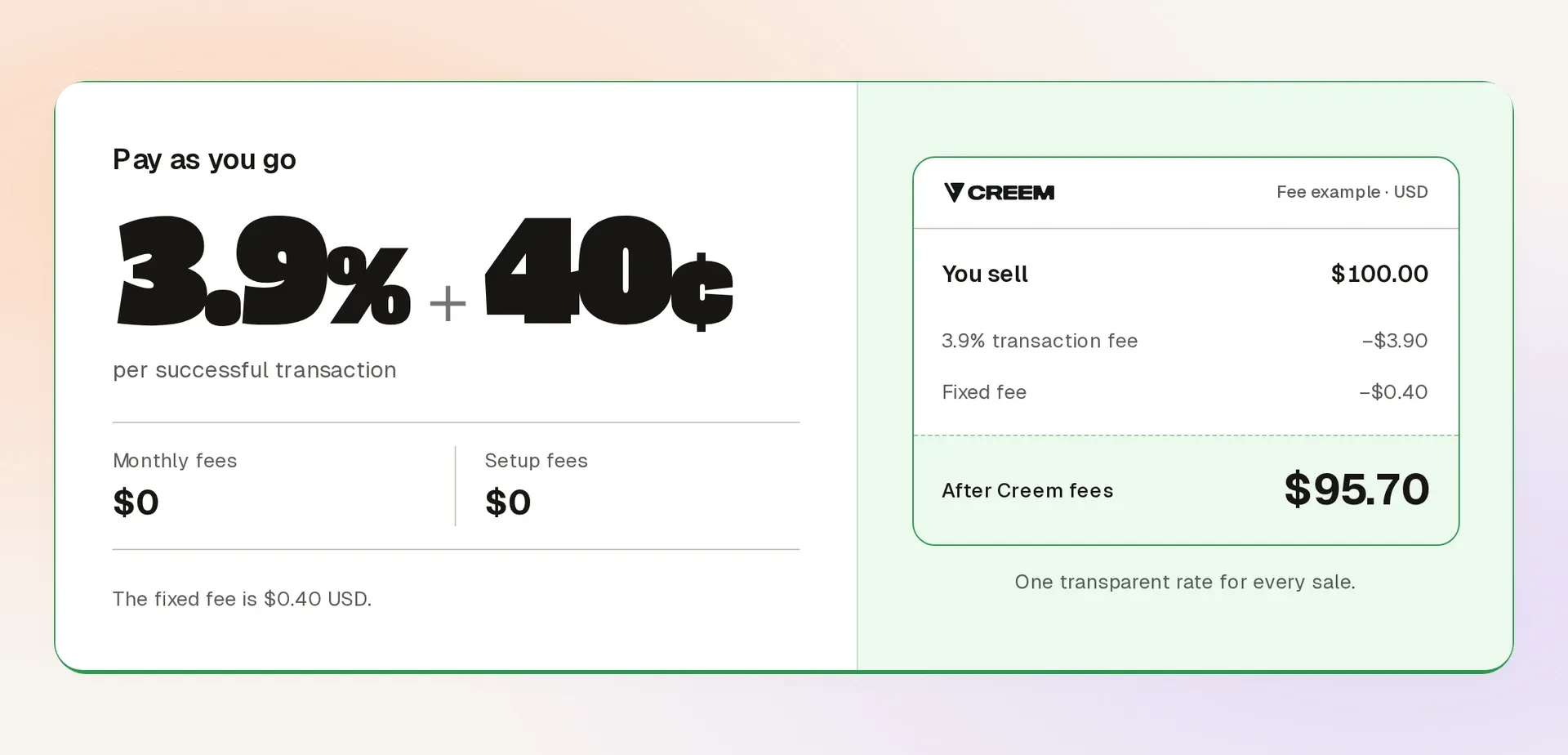
On a $100 sale, Creem's base fees leave you $2.40 more than Stripe plus Managed Payments. Try Creem and set up your credit wallet or usage meter from the dashboard, or have an agent create it through the API, CLI or MCP.
2. Paddle: Subscription operations bundled into one rate
Overview
Paddle brings checkout, recurring billing, invoices and buyer support into its merchant-of-record service. I see it as a practical way to consolidate subscription operations when renewals account for much of your revenue.
Paddle handles sales-tax obligations in over 100 jurisdictions. It also screens for fraud, handles chargebacks and answers buyer questions about payments, subscriptions and cancellations.
Failed-renewal recovery is included in Paddle’s rate.
Best for
Paddle suits SaaS businesses looking to outsource transaction-tax obligations, recurring charges and failed-renewal recovery to one provider.
Pricing
It takes 5% + $0.50 from each checkout transaction, with no monthly fee. That rate includes payments, subscription billing, tax handling, fraud screening, chargebacks and payment-related buyer support.
On a $100 sale, the fee is $5.50, leaving $94.50. The fixed fee weighs more heavily on low-priced products: a $10 sale costs $1.00, an effective fee of 10%. Paddle directs sellers with products priced below $10 to ask for bespoke pricing.
3. FastSpring: Tax-audit support with negotiated pricing
Overview
FastSpring lets software and digital-product businesses outsource payment collection, recurring charges and transaction-tax administration. As merchant of record, it handles sales-tax collection and remittance, screens for fraud and distributes earnings to sellers. B2B invoicing and interactive B2B quotes are included.
FastSpring responds to VAT and sales-tax audits concerning sales where it acts as merchant of record. I see that as worth considering for software vendors with international sales and a substantial B2B business.
Best for
FastSpring suits established software and SaaS vendors that need B2B invoicing, subscription management and help responding to transaction-tax audits.
Pricing
Fees are negotiated based on transaction volume and type, with no minimum transaction volume. The onboarding path starts with a demo request and a pricing conversation.
FastSpring publishes no transaction rate to set against Stripe’s 6.7% fee on a $100 sale. Its cost becomes comparable once you have a quote for your business, so bring your Stripe all-in figure to the sales call.
4. PayPro Global: Assisted setup with quote-based pricing

Overview
PayPro Global handles sales tax, VAT and customer invoices as merchant of record.
Buyers can check out in more than 30 languages and 140 currencies.
I would consider it for an integration that needs hands-on help. Premium onboarding and assisted integration cover checkout customization, emails and product setup. PayPro Global also lists worldwide payment cascading to improve authorization rates, making payment acceptance another part of the commercial evaluation.
Best for
It fits downloadable-software businesses that want assisted checkout, email and product setup alongside merchant-of-record coverage.
Pricing
PayPro Global packages all its features into one quoted price rather than publishing separate feature tiers. Without a public standard transaction rate, its cost cannot be set against Stripe’s 6.7% on a $100 sale until you have a quote. Its appeal is the assisted setup and software-commerce scope, while the negotiated fee determines whether that package is worth choosing.
5. Lemon Squeezy: Turnkey creator storefront
Overview
Lemon Squeezy gives you a store page, hosts your downloads and lets you send emails to buyers. Stripe acquired it, making it another merchant-of-record option within the Stripe family.
Lemon Squeezy is the merchant of record for those purchases, taking responsibility for transaction-tax calculation, collection, filing and remittance.
I see it as a practical starting point for download sales.
Best for
Lemon Squeezy fits solo creators selling downloads or software subscriptions who want a turnkey storefront alongside merchant-of-record services.
Pricing
It takes 5% + $0.50 per transaction, with no monthly charge for ecommerce features. At the base rate, a $100 transaction costs $5.50, leaving $94.50 before applicable additional fees.
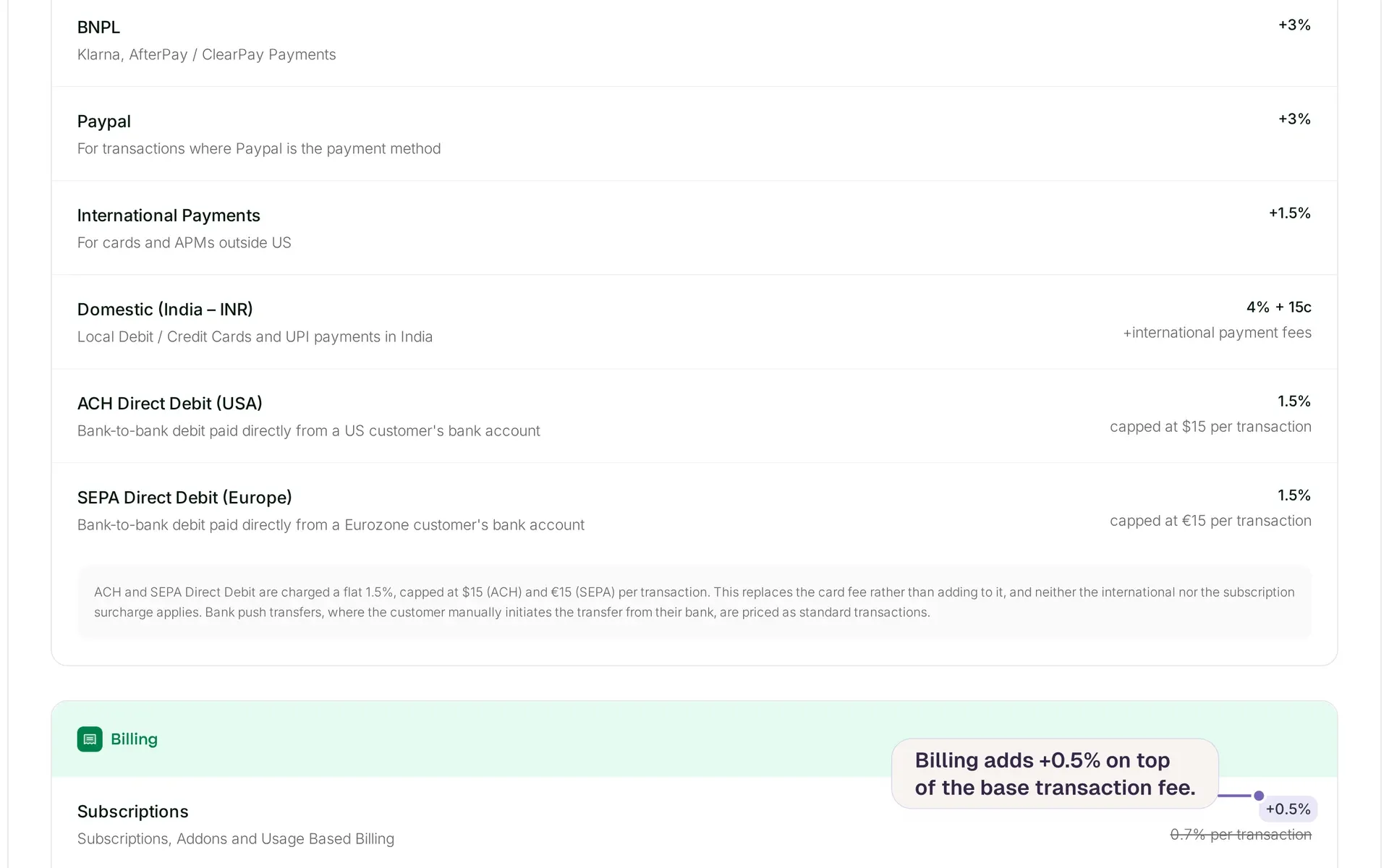
International payments add 1.5%, PayPal 1.5% and subscriptions 0.5%.

Earnings are paid by bank wire or PayPal.
6. Dodo Payments: AI billing with transaction surcharges

Overview
Consumption-based charges and subscription payments are central to Dodo Payments’ focus on AI-first companies. Credits and metering alone are not a reason to switch from another provider that already supports them.
Best for
Dodo Payments targets AI-first companies that need to collect both consumption-based charges and subscription payments.
Pricing
Dodo Payments charges a base 4% + 40¢ for domestic US cards and wallets. Subscriptions, add-ons and usage-based billing add 0.5% per transaction, while metered usage costs $1 per million events. A $100 subscription costs $4.90 before other applicable charges, so the base rate alone understates subscription costs.
7. Polar: Developer-focused, open-source MoR

Overview
Polar is an open-source merchant of record built on Stripe. It resells your product, taking on the seller role and international transaction-tax liability that direct Stripe processing leaves with your business.
Polar's plans list no affiliate program, so a partner program needs a separate tool.
Best for
Polar suits developers selling software or digital products who prefer an open-source merchant of record and do not need a native affiliate program.
Pricing
Starter charges 5% + $0.50 per transaction, with another 1.5% for non-US cards. A $100 purchase paid with an international card costs $7.00, leaving $93.00 before tax deductions and payout costs.
Paid plans exchange a monthly charge for lower transaction rates. Scale costs $400 a month and charges 3.4% + $0.30 per transaction, with the international-card surcharge still applying. Its lower variable rate becomes useful as volume grows, while Starter avoids a fixed monthly bill.
Disputes cost $15 each regardless of outcome, deducted from your balance.
8. Fungies: Game-commerce tooling at 5% + 50¢
Overview
Fungies acts as merchant of record for software subscriptions, games and downloads. It accepts international payments and handles VAT and sales-tax administration for those purchases.
Its game tools distribute keys, organize in-game item catalogs and provide mobile web stores. Those tools make Fungies worth considering for selling game keys or items alongside software because they cover game-commerce work beyond taking payment.
A no-code store builder lets you create the storefront, while a WooCommerce plugin connects Fungies to an existing WordPress store. That gives you a choice between building a store there and keeping the one you already run.
Best for
Fungies suits indie game studios selling game keys, in-game items and digital products through a built-in storefront.
Pricing
Fungies charges 5% + 50¢ per sale, with no international, subscription or payment-method surcharge. Disputes are covered by that commission, with no per-dispute fee. On a $100 sale, the fee is $5.50, leaving $94.50, matching Paddle's standard rate.
9. Whop Payments: Billing and tax as paid add-ons
Whop's billing fee adds 0.5% per transaction when enabled, and tax and remittance add 2% when enabled and tax is collected. Both sit on top of base processing, so the total cost depends on which services you turn on.
Best for
Whop Payments charges for billing and tax handling only when you turn them on. I'd look at it when you already sell on Whop.
10. Gumroad: Creator commerce with a substantial transaction fee

Overview
Gumroad takes responsibility for sales tax as the merchant of record, charging buyers the applicable tax and paying it to authorities worldwide. Its memberships support recurring payments for podcasts, courses and SaaS subscriptions.
Best for
Gumroad is built for creators selling courses, podcasts and memberships who want the platform to handle sales taxes on their purchases.
Pricing
It charges 10% + $0.50 for sales through your profile or direct links, with no monthly fee. On a $100 direct sale, Gumroad’s platform fee is $10.50.
When a new customer finds and buys your product through Gumroad Discover, the fee is 30%. A $100 sale through Discover costs $30, leaving $70.
Gumroad’s 10% + $0.50 direct-sale platform fee alone exceeds Stripe’s $6.70 processing-plus-Managed-Payments calculation on a $100 sale, making it a weak choice if reducing transaction costs is why you are leaving Stripe.
What to do if you are considering Stripe Managed Payments
If you are already on Stripe, pull your last three months of revenue and multiply it by 3.5%.
I would compare that added cost, alongside your existing processing fees and Billing for your pricing model, with a dedicated merchant of record's fees, and count the subscription migration effort on the same sheet. In most cases, dedicated MoRs are cheaper.
Starting from scratch, I would go straight to a merchant of record instead of handling sales tax myself.
At enterprise scale, $1M+ ARR and deep in Stripe, I would include migration costs in the comparison. Substantial payment infrastructure changes the cost of moving, while Managed Payments still adds 3.5% to processing.
Creem: Merchant of Record, Billing, and Growth in One Platform
Creem is the merchant of record for your sales, with prepaid credits, usage billing, affiliates and automatic revenue splits in the same account. One published rate of 3.9% + 40¢ covers merchant-of-record tax, invoices and dispute handling.
When customers buy your software or AI product, Creem makes the sale on your behalf. Checkout can stay on your own domain.
The billing and partner tools follow what happens after that purchase:
- Prepaid credit wallets collect cash before your app spends compute on a request. Usage draws down the balance, and auto-refill tops it up.
- Subscriptions charge for recurring access or seats, while meters count consumption for postpaid billing.
- Referral links connect clicks to checkout conversions. Creem pays affiliates their commission and routes collaborators’ revenue shares automatically from sales.
For indie hackers, bootstrapped founders and early-stage SaaS, Creem is the cheaper Stripe Managed Payments alternative. At $10,000 a month in $100 sales, Creem's fees come to $430 against $670 on Stripe plus Managed Payments, a saving of $240 a month, or $2,880 a year. You can get started in minutes.
Try Creem and route your next sale through it. At that volume, the $240 a month stays in your business instead of going to fees.