

In July 2024, Stripe bought the platform that runs your checkout. That raises a question about who now sets your checkout and payout terms. If you sell a SaaS plan, a template pack or a course through Lemon Squeezy, you now have to choose where to move.
Lemon Squeezy made life easy for indie sellers by being the legal seller on every sale. As merchant of record, it collected and remitted VAT and sales tax and handled chargebacks for you. That is the part worth keeping. Move to a plain payment processor and those registrations, filings and disputes land back on your desk.
While Paddle chases enterprise contracts and Lemon Squeezy gets absorbed into Stripe, Creem is doubling down on the founders and builders who need a payment partner, not a corporate vendor. Lemon Squeezy was great. We built Creem to keep that legal-seller model for SaaS, AI tools and digital downloads.
Six of the seven picks act as merchant of record: Creem, Paddle, FastSpring, Polar, Gumroad and Stripe's own Managed Payments. The seventh, Payhip, is a creator storefront that runs on your own payment account and handles less of the tax.
Lemon Squeezy alternatives compared: fees, tax and fit
Start with who takes responsibility for the sale. The headline fee does not tell you who is legally selling to the buyer or who owes the tax. Six options offer merchant-of-record services. Payhip collects and remits EU and UK VAT, while payments run through your connected gateway, so you remain the seller.
| 🛒 Platform | ⚖️ Seller responsibility | 🌍 Tax handling | 💰 Base fee | 💸 Payouts | 🎯 Fits |
|---|---|---|---|---|---|
| 🏆 Creem | Creem is the legal seller | VAT, GST and sales tax collected, filed and remitted | 3.9% + 40¢. Standard-plan affiliates and revenue splits each add 2% | Bank or crypto payouts processed on the 1st and 15th. USDC payouts cost 2% | SaaS, AI and software companies and digital-product sellers selling worldwide |
| ✓ Paddle | Paddle is merchant of record | Global sales tax collection, filing and remittance | 5% + 50¢ | Not published | Software businesses needing subscription billing and B2B invoicing |
| ✓ Stripe Managed Payments | Stripe acts as merchant of record for eligible digital products | Compliance in more than 80 countries. Outside coverage, responsibility stays with you | US domestic cards: 2.9% + 30¢ plus 3.5%. Billing adds 0.7% | Settlement funds credited to your Stripe account balance | Eligible digital-product businesses already using Stripe Checkout or Payment Links |
| ✓ FastSpring | FastSpring is merchant of record | Global sales tax collection and remittance | Negotiated revenue-sharing rate | Earnings distributed with platform fees withheld | Software businesses needing B2B quotes and assisted integration |
| ✓ Gumroad | Gumroad is merchant of record | Sales tax collection and remittance worldwide | 10% + 50¢ direct sales. 30% Discover sales | Bank deposit or PayPal, depending on your country | Courses, templates and memberships sold through a creator storefront |
| ✓ Polar | Polar is merchant of record | Global sales tax liability, filing and remittance | Starter: 5% + 50¢. Lower rates require $20 to $400 monthly plans. International cards add 1.5% | Manual withdrawals. $2 per month with active payouts, plus 0.25% + $0.25 per payout. Cross-border fees apply | Developers selling private GitHub repository or Discord community access |
| ⚠️ Payhip | You sell through your connected payment account | Automatic EU and UK VAT remittance. Other taxes configured and reported | Free: 5%. Plus: $29/month + 2%. Pro: $99/month + 0%. Gateway fees apply | Proceeds sent to your payment account immediately after a completed transaction | Simple downloads, courses and memberships without a full global MoR replacement |
| 🍋 Lemon Squeezy | Lemon Squeezy is merchant of record | Global sales tax collection, filing and remittance | 5% + 50¢. International transactions add 1.5%. Subscriptions add 0.5% | Twice monthly. US bank payouts are free. Non-US bank payouts cost 1% | Software, courses and templates already using its subscriptions, license keys and signed downloads |
Compare the legal-seller model first, then calculate fees for your mix of international cards, subscriptions and affiliate sales.
1. Creem: MoR replacement with billing and partner growth
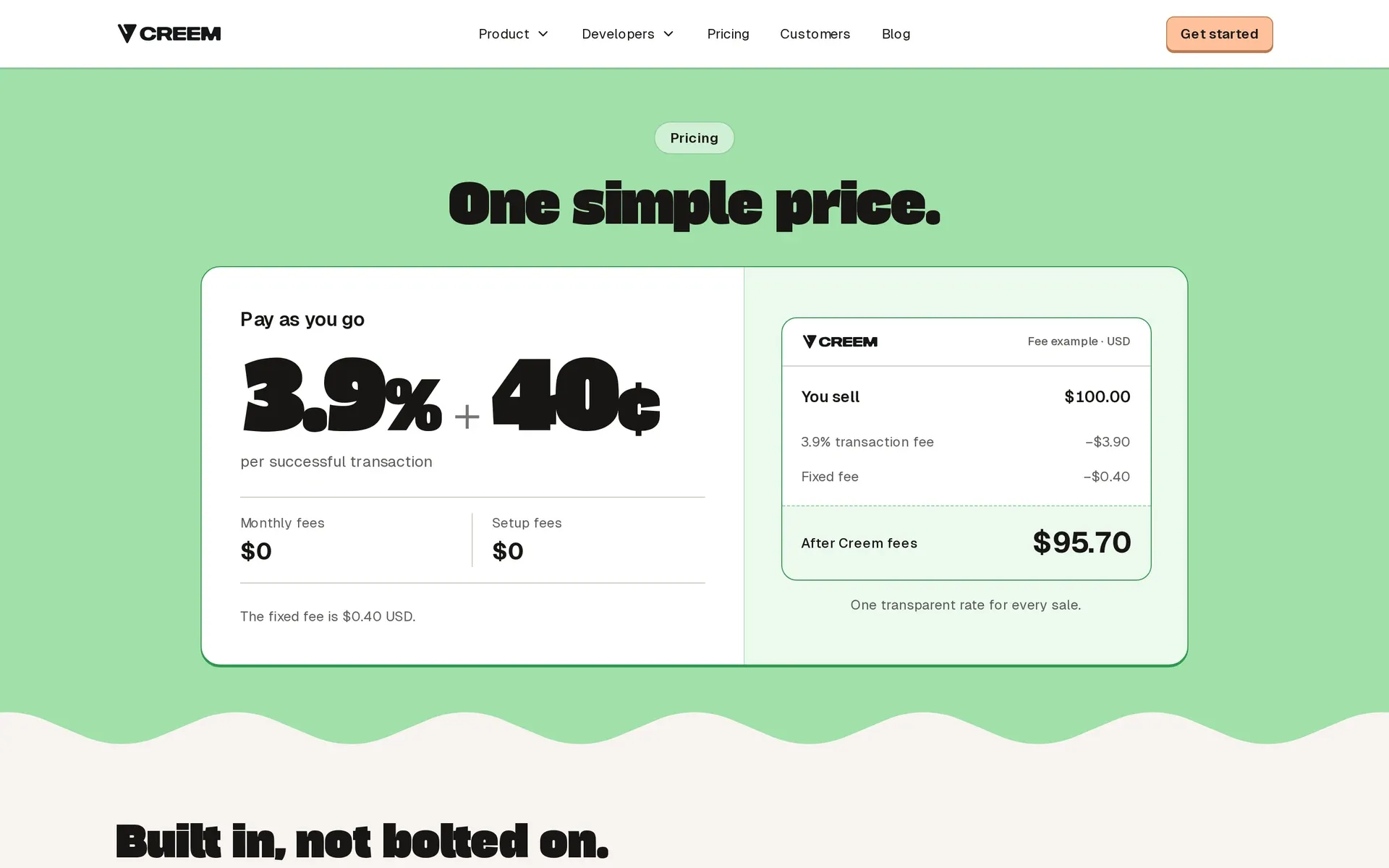
Creem pricing page: 3.9% + 40¢ per successful transaction, $0 monthly and setup fees, and a $100 sale netting $95.70
Overview
Creem is the merchant-of-record replacement for SaaS and AI teams that chose Lemon Squeezy because one integration covered checkout, tax and billing.
We charge 3.9% + 40¢ on each successful payment for merchant-of-record handling, with processing included and no monthly fee or international-card surcharge. Paddle and Lemon Squeezy start at 5% + 50¢.
Creem is my pick when leaving Lemon Squeezy means keeping tax responsibility off your plate while bringing usage charges and partner payments into the same platform.
Creem sells your software or digital product to the buyer on your behalf. It processes the payment, issues the invoice, handles fraud and chargebacks, and pays out your earnings. As merchant of record, Creem calculates, collects and remits applicable VAT, GST and sales tax for supported sales.
The checkout and fulfillment options cover downloads, licenses and recurring access:
- Share a hosted checkout, brand it for your store or embed it in your website. Checkout can run on your own domain.
- Generate license keys and deliver files after a digital-product purchase.
- Charge subscriptions or seats, offer trials and give customers a portal to manage their billing.
For an AI product, the useful difference is how you charge for compute. Custom meters count tokens, images, minutes or API calls. You can invoice usage after the billing period, or collect payment upfront through credit packs that your app debits as customers use the product, with auto-refill when their balance runs low.
Affiliates get trackable referral links and automatic commission payouts. Revenue splits send collaborators or licensors their share of each sale, while short links connect clicks with checkout conversions. That removes the spreadsheet between a partner bringing you a buyer and receiving their share.
In our case study, DaisyUI's Pouya Saadeghi moved his component library from Lemon Squeezy in a few hours and needed no extra tools for revenue sharing. Support replies arrived in under a day.
In our case study with the product-discovery platform Uneed, Thomas Sanlis switched 1,500+ lines of payment code to Creem with 3 AI prompts and 0 integration errors, in minutes. Creem’s API and SDKs support product setup and payment integration.
Best for
Creem fits indie hackers, solo SaaS founders, AI builders and small teams selling software and digital products worldwide who want seller responsibility, billing and partner payments handled together.
Customers can buy prepaid credits with auto-refill while Creem automatically pays affiliates and licensors their share of each sale.
Pricing
Pay as you go costs 3.9% + 40¢ per successful transaction, with no monthly fee, setup fee or minimum volume. A $100 sale leaves $95.70 after the $3.90 percentage fee and 40¢ fixed fee, before optional services.
The same sale leaves $94.50 at Paddle’s and Lemon Squeezy’s 5% + 50¢ rate, before Lemon Squeezy’s international and subscription surcharges.
The standard plan’s additional charges are:
- Affiliate transactions add a 2% platform fee before commission is calculated, compared with Lemon Squeezy’s 3% affiliate referral fee.
- Revenue splits add 2% before commissions are calculated.
- Abandoned-cart recovery adds 5% on recovered transactions.
- USDC payouts on Polygon cost 2% of payout volume.
The Creem team plans the subscription migration with you so the move covers your recurring customers alongside checkout.
Try Creem and start that migration plan with the team while your Lemon Squeezy store keeps selling. Your subscribers move once checkout is live, so no renewal falls between the two platforms.
2. Paddle: Software billing with B2B invoicing
Paddle homepage: merchant of record for digital product businesses, handling payments, tax, compliance and billing
Overview
Paddle acts as merchant of record for software businesses, running self-serve subscriptions and invoices for business buyers. It collects and remits sales taxes, screens payments for fraud and handles chargebacks, alongside recurring billing and invoicing.
The billing tools cover what happens after checkout:
- Handle renewals, prorated plan changes and multiple seats within a subscription.
- Invoice business customers with the applicable sales tax handled by Paddle.
- Embed branded checkout in your website or application.
- Retry failed payments and follow up with customers to recover renewals.
Buyer support covers questions about payments, subscriptions and cancellations.
Best for
Paddle suits growing SaaS and software businesses selling through both self-serve subscriptions and B2B invoices. I’d pick it when business customers ask for invoices alongside self-serve plans, rather than for a lower headline rate.
Pricing
Paddle takes 5% + $0.50 from each checkout transaction and charges no monthly fee. On a $100 sale, the base fee is $5.50, leaving $94.50.
The fixed 50¢ matters more on low-priced products. Paddle directs sellers of products under $10 to bespoke pricing, so low-priced software products need a separate pricing conversation. Custom rates are also available for high-volume businesses and more complex needs.
The headline rate matches Lemon Squeezy, but international renewals cost less on Paddle’s standard pricing. Lemon Squeezy adds 1.5% for international transactions and 0.5% for subscriptions. For subscription payments from customers outside the US, those Lemon Squeezy surcharges total 2 percentage points. Paddle’s standard pricing lists neither surcharge.
3. Stripe Managed Payments: Native Stripe MoR with an added percentage
Stripe Managed Payments page: Stripe as merchant of record, with tax collection and remittance automated in 80+ countries
Overview
The irony is that leaving Lemon Squeezy can still lead you to its acquirer. Stripe Managed Payments brings merchant-of-record handling to digital-product purchases made through Stripe’s hosted checkout and payment links, with Billing supporting subscriptions.
For eligible software subscriptions and digital downloads, Stripe calculates, collects, files and remits sales tax, VAT and GST across more than 80 countries. It also handles fraud prevention, disputes and payment-related customer support. Sales outside its tax coverage leave the tax obligations with you.
With standard Stripe processing, your business remains the seller. Stripe Tax helps with calculations, registration and filing without changing that responsibility. Managed Payments makes Stripe the merchant of record for eligible transactions.
Best for
Stripe Managed Payments fits software and digital-product businesses with an existing Stripe checkout integration that want MoR coverage for eligible sales.
Customers need a Link account to access its subscription-management tools, including cancellations and payment-method updates. Receipts, invoices and transaction support also come through Link. Stripe provides hosted checkout and payment links, but not a full digital-product storefront.
Pricing
The MoR service adds 3.5% to Stripe processing. A US domestic card payment therefore costs 6.4% + $0.30, leaving $93.30 from a $100 sale before tax and applicable extras.
The additional charges matter for worldwide subscriptions:
- International cards add 1.5%.
- Currency conversion adds 1% when required.
- Pay-as-you-go Billing adds 0.7% of billing volume.
An international-card subscription without currency conversion totals 8.6% + $0.30, leaving $91.10 from $100. Lemon Squeezy’s base, international and subscription fees total 7% + $0.50 on the same sale, leaving $92.50.
4. FastSpring: Established software commerce with negotiated costs
FastSpring pricing page with no published rate and a Get your pricing quote button
Overview
For software sales that need B2B quotes, FastSpring keeps your global sales under a merchant-of-record model. It takes payments, manages subscriptions, sends the transaction taxes to the relevant authorities and pays out your earnings after withholding its commission.
For business buyers, B2B invoicing and interactive quotes are included. FastSpring also handles sales-tax and VAT audits for transactions where it acts as the merchant of record.
The rate includes fraud prevention, international payment processing, localized payment methods and currency localization. FastSpring does not add a separate fee for each platform feature you use, which matters when your buyers span countries and payment methods.
Best for
FastSpring suits desktop-software and SaaS companies with business buyers who need quotes and invoices, alongside worldwide self-serve sales. I’d look at it once you have meaningful sales volume to negotiate with and customers asking for quotes. It is a heavier commercial decision for a first launch.
Pricing
FastSpring uses one flat revenue-share rate covering every platform feature, set by your volume and transaction types. There is no minimum transaction volume, but getting your rate requires a sales conversation.
5. Gumroad: Creator storefront with separately priced marketplace discovery
Overview
To sell downloads or recurring memberships, Gumroad gives you hosted product pages, file delivery and basic license keys. Since January 1, 2025, it has also acted as merchant of record, collecting and remitting sales tax worldwide. Moving from Lemon Squeezy keeps that tax work off your plate.
Discover adds a marketplace where buyers can find your products without arriving through your own links.
Best for
Gumroad fits ebook authors, template makers and course creators who need a hosted store for downloads or memberships, with a marketplace alongside it. Its reason to be here is creator convenience and Discover. I would not choose it as a cheaper way off Lemon Squeezy.
For a SaaS or AI product, the direct-sale rate takes an extra 5 percentage points compared with Lemon Squeezy’s base rate. That gap grows with every renewal.
Pricing
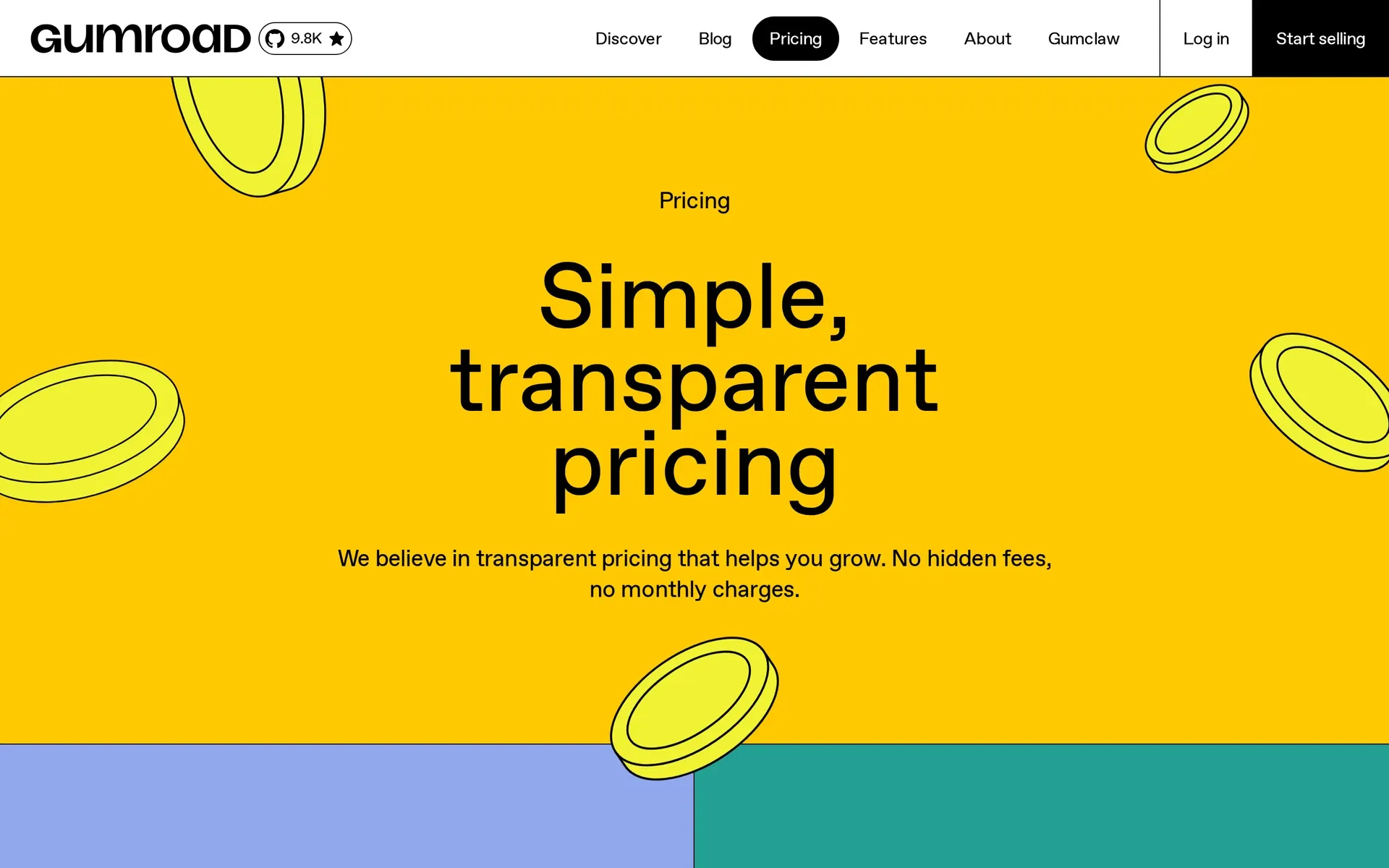
Gumroad charges no monthly fee. The transaction fee depends on how the buyer reaches your product:
- Purchases through your profile or direct links incur a 10% + $0.50 fee.
- Purchases brought by Discover incur a 30% fee.
On a $100 direct sale, the fee takes $10.50, leaving $89.50. A Discover sale of the same amount leaves $70. Discover’s 30% cut is why creators compare other storefronts besides Gumroad once volume grows.
Gumroad pricing page headed Simple, transparent pricing
6. Polar: Developer billing with automated access
Polar homepage: the billing stack for developer and AI products, with usage-based token billing
Overview
Polar is an open-source merchant of record built for developers. Paid developer products can combine billing with automated repository and community access. It takes on international sales-tax liability, filing and remittance, with billing for subscriptions and usage-priced software.
A purchase can also grant access to a private GitHub repository or Discord community, deliver a license key or unlock a download. That connects the payment to what the buyer receives without a separate access-provisioning integration.
Best for
Polar fits developer teams whose paid software includes private code or community access. I’d pick it when getting buyers into a repository or Discord is a substantial part of the product.
Pricing
Lower transaction rates require a paid monthly plan:
| Plan | Monthly fee | Transaction fee |
|---|---|---|
| Starter | $0 | 5% + $0.50 |
| Pro | $20 | 3.8% + $0.40 |
| Growth | $100 | 3.6% + $0.35 |
| Scale | $400 | 3.4% + $0.30 |
Starter matches Paddle’s base rate. Scale leaves $96.30 from a $100 sale, before international-card charges, payout costs and its monthly fee.
Pro breaks even against Starter at about $1,379 in monthly sales, assuming a $40 average subscription order. Below that threshold, Starter costs less than Pro.
Getting paid adds $2 per month while payouts are active, plus 0.25% + $0.25 per payout. Cross-border conversion fees range from 0.25% to 1%. Each dispute costs $15, regardless of the outcome.
International cards add 1.5% on every plan. Starter therefore costs 6.5% + $0.50 for those purchases, compared with Paddle’s 5% + $0.50 standard rate.
7. Payhip: Creator storefront, not a global MoR replacement
Overview
Payhip runs a download, course or membership store connected to your own payment account. The charge runs through your connected Stripe or PayPal account, so you remain the seller.
Payhip sends EU and UK VAT to the tax authorities for you. Elsewhere, taxes collected through its checkout are passed to you to file and pay.
Money lands in your payment-provider balance right after the sale. When it reaches your bank depends on that provider’s payout schedule.
Best for
Payhip fits creators selling courses and downloads who already have a supported payment account and can handle tax obligations beyond EU and UK VAT. I’d use it for creator products sold mostly into those markets. For worldwide software sales, I’d keep a merchant of record rather than take the tax work back.
Pricing
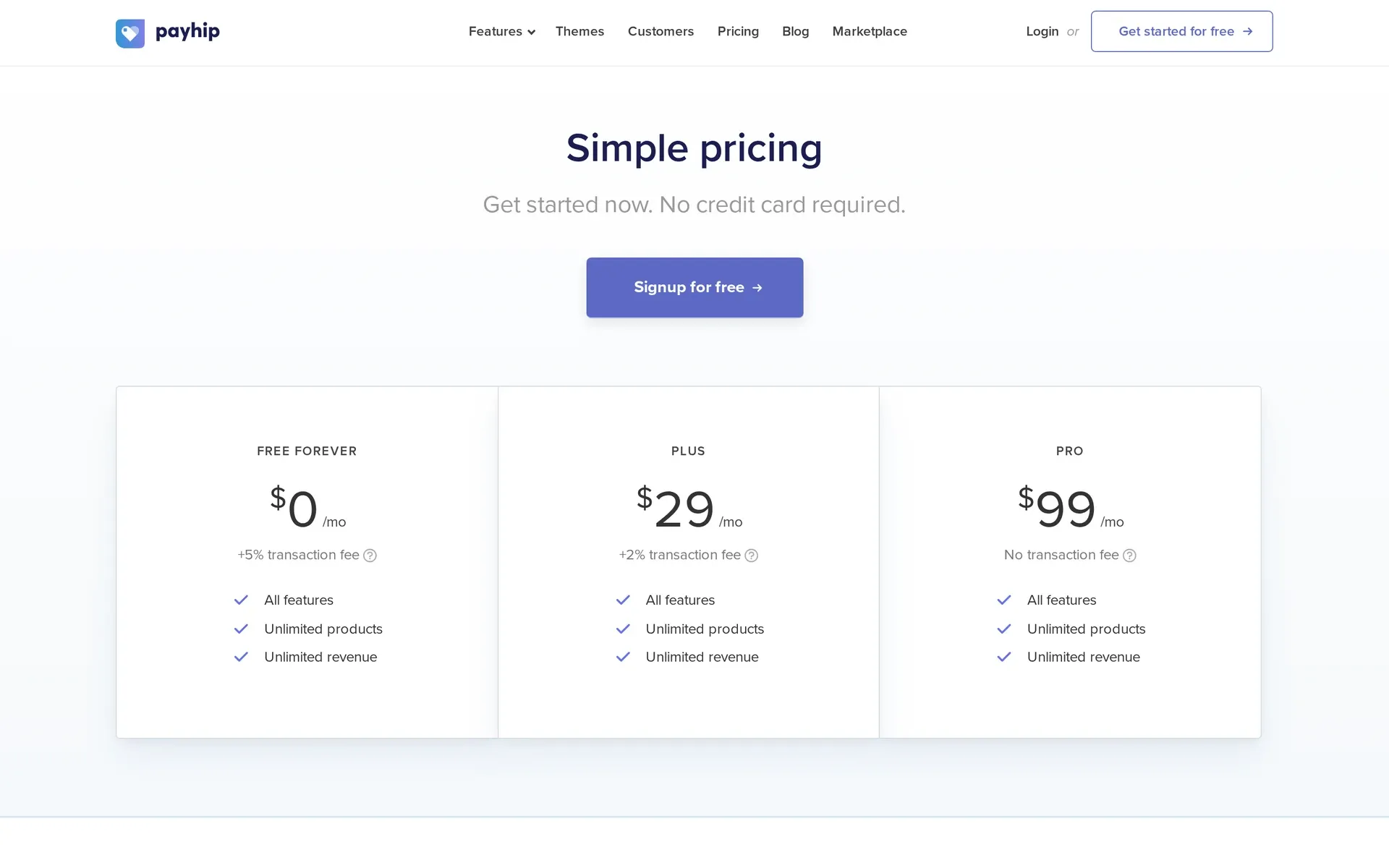
Payhip’s plans trade a monthly charge for a smaller fee on each sale:
| Plan | Monthly fee | Platform fee |
|---|---|---|
| Free Forever | $0 | 5% |
| Plus | $29 | 2% |
| Pro | $99 | 0% |
Your gateway charges its own processing fee on every plan. Features stay identical across the plans, with no cap on products or revenue.
The fee savings cover the monthly subscription at these sales volumes:
- Plus beats Free Forever above about $967 a month.
- Pro beats Plus above $3,500 a month.
- Pro beats Free Forever above $1,980 a month.
Free Forever’s platform fee is lower than Gumroad’s direct-sale fee, but it is not the whole cost. Using Stripe’s US domestic-card rate of 2.9% + 30¢, Payhip Free Forever totals 7.9% + 30¢. From a $100 sale, you keep $91.80.
Payhip pricing plans: Free Forever with a 5% transaction fee, Plus at $29 a month with 2%, Pro at $99 a month with none
What is Lemon Squeezy?
Lemon Squeezy lets you take payments for software and digital goods while it acts as merchant of record. Since its 2021 launch, it has brought international sales-tax handling, recurring billing and software licensing into a single service.
You manage those jobs from one dashboard and connect your product through one integration.
If you sell a $29/month SaaS subscription to buyers in 30 countries through a plain processor, each of those countries can become a VAT or sales-tax registration in your name. On Lemon Squeezy, the platform calculates, collects and remits that tax, and none of those registrations is yours.
Who is Lemon Squeezy good for?
Lemon Squeezy was built for indie hackers, solo founders, small SaaS teams and digital-product creators. I see the acquisition as a change in that direction. Buyers can purchase internationally while Lemon Squeezy handles the applicable sales tax and VAT on those transactions.
That also makes it useful for a side project: you can charge for recurring access or issue a software license without setting up a separate billing and licensing stack.
Is Lemon Squeezy the best option?
The good
Lemon Squeezy supports subscriptions and licensed downloads, with international sales-tax handling included.
The not so good
In my view, development has slowed, the roadmap is unclear, support response times have slipped and payout cycles have got longer. I also worry about future price increases.
Reasons to consider Lemon Squeezy alternatives
The acquisition gives me reasons to look beyond Lemon Squeezy:
- Since Stripe acquired Lemon Squeezy in July 2024, my concern is how its roadmap and pricing will change as it moves into Stripe.
- Fees already stack: 1.5% for international transactions, 1.5% for PayPal, 0.5% for subscriptions and 1% for non-US bank payouts.
- Building your revenue infrastructure on a platform mid-acquisition is risky.
Alternative approaches: MoR vs. payment processor
Merchant of record (MoR): The platform becomes the legal seller of your product. It collects and remits VAT and sales tax on each order, screens for fraud and answers chargebacks in its own name. You receive payouts minus fees. You still build, fulfill and support the product.
Payment processor: You are the seller. The platform processes payments on your behalf, but you register for VAT where required, file the returns and answer chargebacks yourself.
Stripe Tax keeps your business as the seller while helping with calculation, registration and filing. Stripe Managed Payments is a separate merchant-of-record service for eligible digital transactions.
If Lemon Squeezy’s merchant-of-record model worked for you, keep that model when choosing its replacement.
Which Lemon Squeezy alternative should you choose?
I’d choose by what happens after the buyer pays: a subscription renews, a download arrives, usage becomes a charge or access unlocks.
- Paddle fits software subscriptions that need both self-serve checkout and invoices for business buyers.
- FastSpring suits software companies with an established sales operation, combining international checkout with B2B invoicing and interactive quotes.
- Gumroad sells ebooks, templates, courses and memberships. Profile and direct-link sales cost 10% + 50¢, while Discover sales cost 30%. It lacks native metered SaaS billing.
- Payhip connects a course or download store to your gateway. You handle gateway disputes and tax obligations beyond its EU and UK VAT remittance.
- Stripe Managed Payments lets existing Checkout or Payment Links users add MoR handling for eligible digital sales without rebuilding. Subscribers then manage their subscriptions in Link.
- Polar turns reported usage into charges and purchases into downloads, license keys, private GitHub access or Discord access.
Choose a replacement that takes on seller responsibility and supports how your product charges. A lower rate is no saving if it leaves you adding a separate billing or affiliate tool, or filing tax yourself.
The bottom line
Creem is my pick for replacing Lemon Squeezy: you keep the legal-seller model, pay 3.9% + 40¢ and avoid an international-card surcharge. Creem sells your software and digital products on your behalf and handles tax, invoices, fraud and chargebacks.
Lemon Squeezy was great. The Stripe acquisition changed the equation. Creem is the closest thing to what Lemon Squeezy was supposed to become.
If that is the Lemon Squeezy you signed up for, try Creem and bring your first product over this week. Your affiliates and collaborators keep getting their shares on the new checkout, with no separate payout tool.