
Your product is live, and the first international subscription renewals are coming up. Lemon Squeezy and Gumroad both offer checkout with tax handled and no monthly fee, so either can look like the easy choice.
No monthly fee does not make the two options interchangeable. A checkout that works for a download still leaves you deciding how billing will keep a subscription connected to access inside your app.
A rate that seemed small at launch becomes a recurring cost as sales grow. A poor fit also means rebuilding payments while subscribers are already renewing.
You’ll leave with a choice grounded in what your software sales cost and what happens after the buyer pays.
If you already need tax handled at a lower transaction rate, try Creem at 3.9% + 40¢ against Lemon Squeezy’s 5% + 50¢ base rate.
The core difference: storefront vs software billing layer
Gumroad gives you a storefront and marketplace for selling downloads, while Lemon Squeezy helps you bill subscriptions and issue license keys for software. That difference matters most when a purchase needs to keep an app account active after checkout.
A download sale can end when the buyer gets the file, but a SaaS subscription keeps going because payment status determines whether they should still have access. Your app still needs to connect payment status to access.
Gumroad’s advantage is distribution. Its marketplace helps buyers find your product beyond your own links, which can matter more for downloads than a deeper billing setup. Gumroad also supports memberships, so recurring charges alone do not settle the choice.
I would lean toward Lemon Squeezy for subscriptions or licensed software, and Gumroad for downloads where marketplace discovery matters. Decide whether the purchase ends when you deliver the product or needs to keep controlling access inside it.
Lemon Squeezy and Gumroad compared at a glance
Both platforms offer recurring billing and software licensing, so those features alone do not settle the choice. Compare what each sale costs with how each platform supports it.
| Platform | Per-sale fee | Billing and licensing | Fit |
|---|---|---|---|
| Lemon Squeezy | 5% + 50¢ base rate | Subscriptions, license keys and an API | Software and digital products |
| Gumroad | 10% + 50¢ for direct sales | Memberships and license verification | Downloads sold through a creator storefront or marketplace discovery |
When estimating fees, keep Gumroad’s direct sales separate from Discover sales and include applicable surcharges for Lemon Squeezy.
Fees: what you actually pay per sale
Whatever your sale price, Lemon Squeezy’s base fee is lower than Gumroad’s direct-sale fee. The calculation is 5% of the payment plus 50¢ for Lemon Squeezy and 10% plus 50¢ for Gumroad direct sales, so with the same fixed charge, changing the price never reverses that base-fee comparison. Gumroad drops to 5% + 50¢ on new direct sales once paid sales pass $20,000 in a calendar month.
| Platform and purchase | Base fee | Effective base rate | After base fee |
|---|---|---|---|
| Lemon Squeezy, $5 | $0.75 | 15% | $4.25 |
| Gumroad direct, $5 | $1.00 | 20% | $4.00 |
| Lemon Squeezy, $20 | $1.50 | 7.5% | $18.50 |
| Gumroad direct, $20 | $2.50 | 12.5% | $17.50 |
| Lemon Squeezy, $100 | $5.50 | 5.5% | $94.50 |
| Gumroad direct, $100 | $10.50 | 10.5% | $89.50 |
These calculations leave out tax, transaction surcharges, affiliate commissions and payout costs. Lemon Squeezy adds 0.5% for subscriptions, 1.5% for payments from outside the US and 1.5% for PayPal. Gumroad’s 10% + 50¢ does not include card processing of 2.9% + 30¢, which brings a $20 direct sale to $3.38 in total fees.
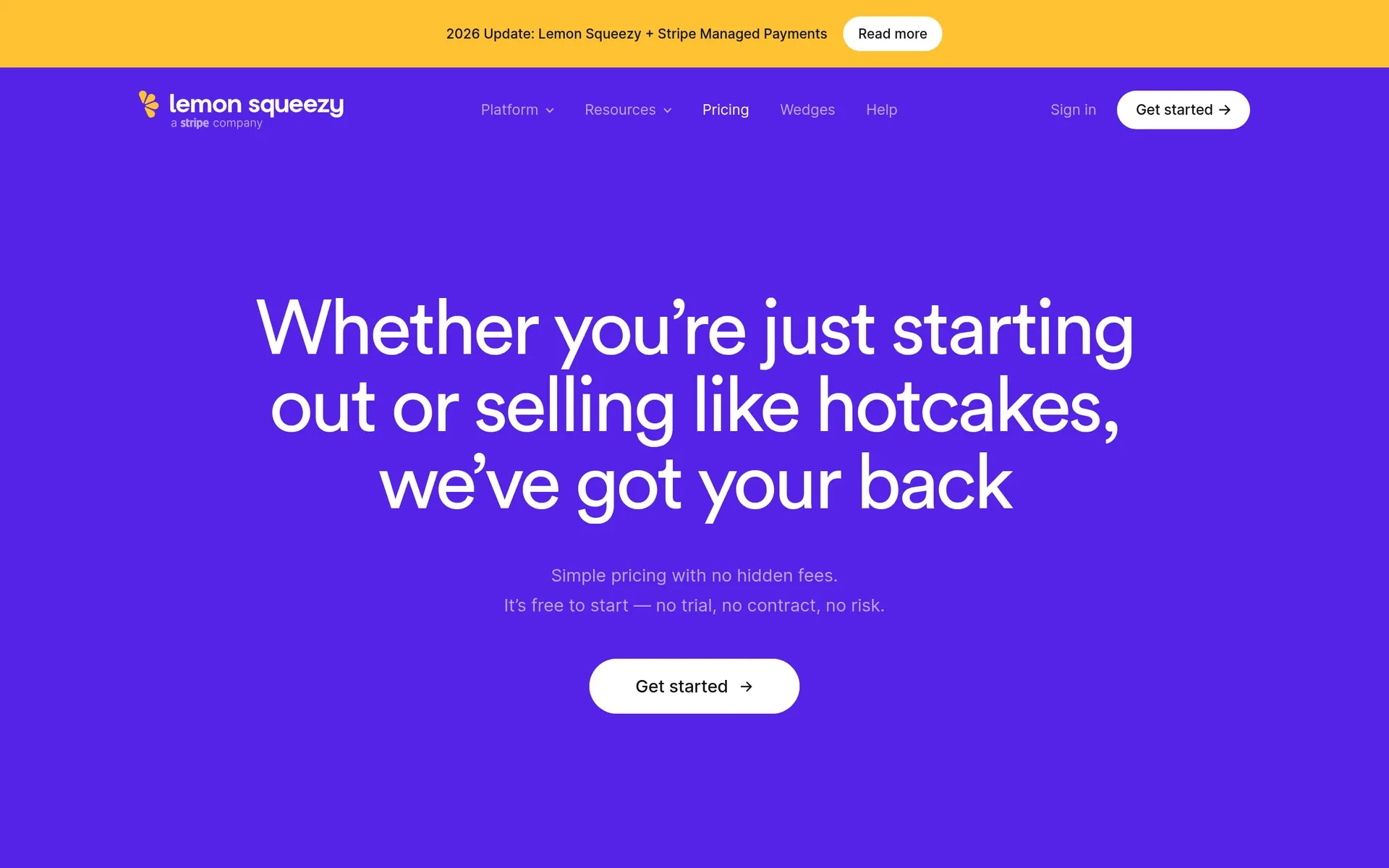
Every successful renewal carries another transaction fee, so budget around your actual renewal price and buyer mix. Gumroad Discover sales use a separate 30% rate, not the direct-sale rate in the table.
Bundling reduces the share of each sale that goes to the fixed fee. At Creem’s published rate, a $5 purchase costs about $0.60, or 11.9%, with the fixed component making up roughly two thirds.
A five-item bundle at $20, for example, costs $1.18 in fees, or 5.9%. Against five separate $5 purchases, that saves about $1.80 in fees but gives up $5 in revenue, so the discount outweighs the fee saving if buyers would otherwise buy all five separately.
I would bundle when it encourages buyers to purchase more items together. Keep the $5 entry product if a bundle would put off first-time buyers or if that purchase leads to a larger one.
Tax and compliance: what each merchant of record covers
Transaction tax moves to the platform when Lemon Squeezy or Gumroad acts as merchant of record for a sale within its tax coverage. As the legal seller, the platform calculates and collects VAT, GST or sales tax, remits it, and issues the buyer’s transaction invoice.
On an international subscription renewal, the merchant of record handles the tax on the charge and the invoice that documents it. Your team still delivers the software and supports the customer.
Both options follow the same basic split of responsibilities. I would count tax handling as a shared benefit, then compare how each supports your billing model. When planning the integration, keep product delivery and support with your team.
Subscriptions, licenses and app access
Your application enforces access using billing information from either platform. Features need to follow the new plan when it takes effect, even if the billing adjustment comes later.
| Billing change | Lemon Squeezy | Gumroad |
|---|---|---|
| Upgrade | Immediate plan change, with prorated adjustment on the next renewal by default | Immediate upgrade with a prorated charge |
| Downgrade | Immediate plan change under the same proration rules | Takes effect at the billing cycle’s end |
Lemon Squeezy also lets you invoice immediately or disable proration without delaying the plan change.
Cancellation is not the access cutoff on either platform. Lemon Squeezy’s documented policy keeps access active until ends_at and allows resumption during that grace period, but an expired subscription cannot resume.
Gumroad’s license verification returns subscription_cancelled_at and subscription_failed_at as membership end dates, not the timestamps of cancellation requests. A successful renewal or restart clears both to null, indicating that membership has been restored.
Lemon Squeezy distinguishes past_due during retries from unpaid after retries fail, and recommends keeping access active unless the subscription is expired.
Subscription API responses and webhooks include a signed, expiring payment-method update URL. Fetch a fresh URL when sending buyers to update their cards, so an expired link does not get in the way of renewal recovery.
I would test plan changes, cancellation and recovery before launch. Getting the access rules right preserves paid access and restores it after a restart, protecting subscriber retention.
Payouts, seller eligibility and cash flow
A successful renewal does not mean the cash is ready to spend. Lemon Squeezy separates payout creation, release and bank arrival, so budget around when the money reaches your bank.
Payouts are created on the 1st and 15th, then released on the 14th and 28th. Bank arrival takes another 1–5 days after release. A sale on the 4th enters the payout created on the 15th and released on the 28th, leaving a 24-day gap before bank processing.
The $50 minimum balance can move smaller balances into a later payout cycle. The amount that reaches you also depends on where you receive it:
- US bank accounts have no payout fee.
- Bank accounts outside the US incur a 1% payout fee.
- US PayPal accounts incur $0.50 per payout.
- PayPal accounts outside the US incur 3%, capped at $30 per payout, paid in USD.
I would budget hosting and compute around expected bank arrival, keeping enough cash to cover the gap between renewals and funds I can use.
Checkout, discovery and affiliates
An affiliate can send buyers to your pricing page, but the referral still needs to reach checkout. Lemon Squeezy supports referrals to your own site or app through its tracking script and lets you credit the first or last affiliate whose link the buyer visits.
For buyers who land on your marketing site and later purchase inside your app, a custom checkout flow needs to pass the affiliate identifier into the checkout URL through aff_ref. Test the full route before partners start sending traffic, so the payment records the referral too.
Marketplace acquisition needs its own measure. I would judge Gumroad Discover by buyers you would not otherwise reach, tracking its share of sales separately from sales through your own links.
If nearly every buyer comes through channels you already run, discovery adds little to the decision. When Discover brings genuinely new buyers, its higher fee can be worth paying for that acquisition.
Choose the attribution rule that fits your partner agreements, and compare discovery-driven sales with direct sales before paying more for distribution.
Lemon Squeezy vs Gumroad: Which one should you choose?
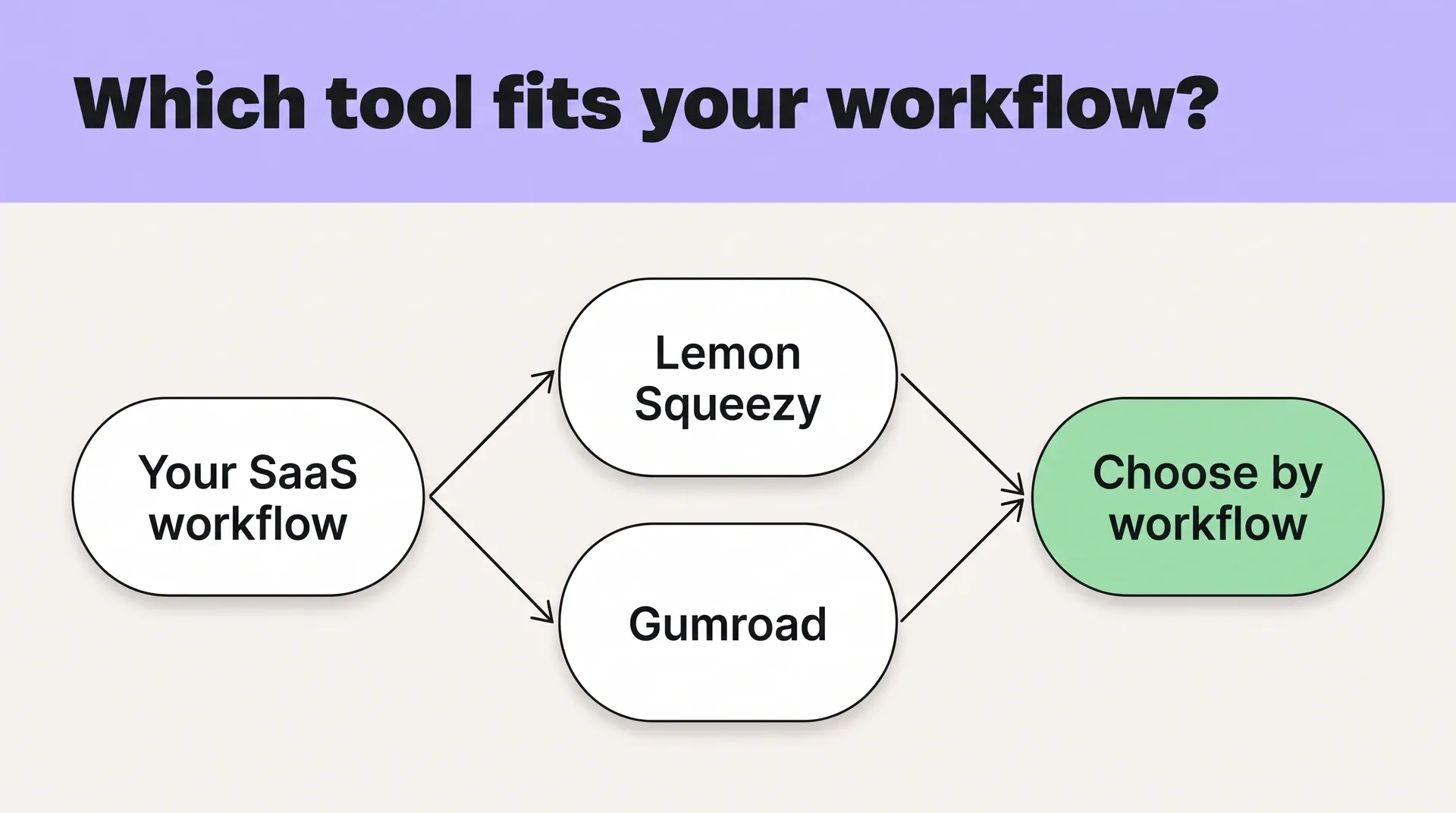
I would choose Lemon Squeezy for software billing and Gumroad when its download storefront and marketplace acquisition are worth the higher cost.
You sell downloads to an audience you already have
For downloads sold through your own links, I would weigh Gumroad’s storefront convenience against Lemon Squeezy’s lower base transaction cost. Licensed software needs a separate assessment because your application also has to check licenses.
You run a SaaS subscription with app access
I would choose Lemon Squeezy for SaaS subscriptions that need its API and plan-change controls. Gumroad supports memberships and license verification, so it remains an option if those cover your billing needs. Your application still has to enforce access with either platform.
DaisyUI creator Pouya Saadeghi’s manual migration to Creem took a few hours. For live subscriptions, though, there is no universal savings threshold.
Twelve-month fee savings at current volume should exceed integration costs. Existing subscribers move over at their own renewal.
If a full move would cost more than it saves, send new sales to Creem and leave existing subscriptions where they are. Those renewals continue without asking subscribers to change their payment setup.
Your product is priced under $10
On base transaction cost, I would still choose Lemon Squeezy. At this price, whether buyers want a bundle or need a low-cost entry product matters more than finding a fee crossover.
You bill by usage, credits or shared revenue
Consumption pricing and shared revenue need more than recurring payment collection. Check how usage turns into a charge, how credit balances refill, and how each sale pays partners.
Usage billing, splits and merchant of record with Creem
Creem is the legal seller for your software and digital products, charging 3.9% + 40¢ per successful transaction, with no monthly or setup fee.
That rate covers transaction-tax handling, invoicing, compliance and disputes. Lemon Squeezy’s base rate is 5% + 50¢, while Creem’s transaction fee on a $100 sale is $4.30.
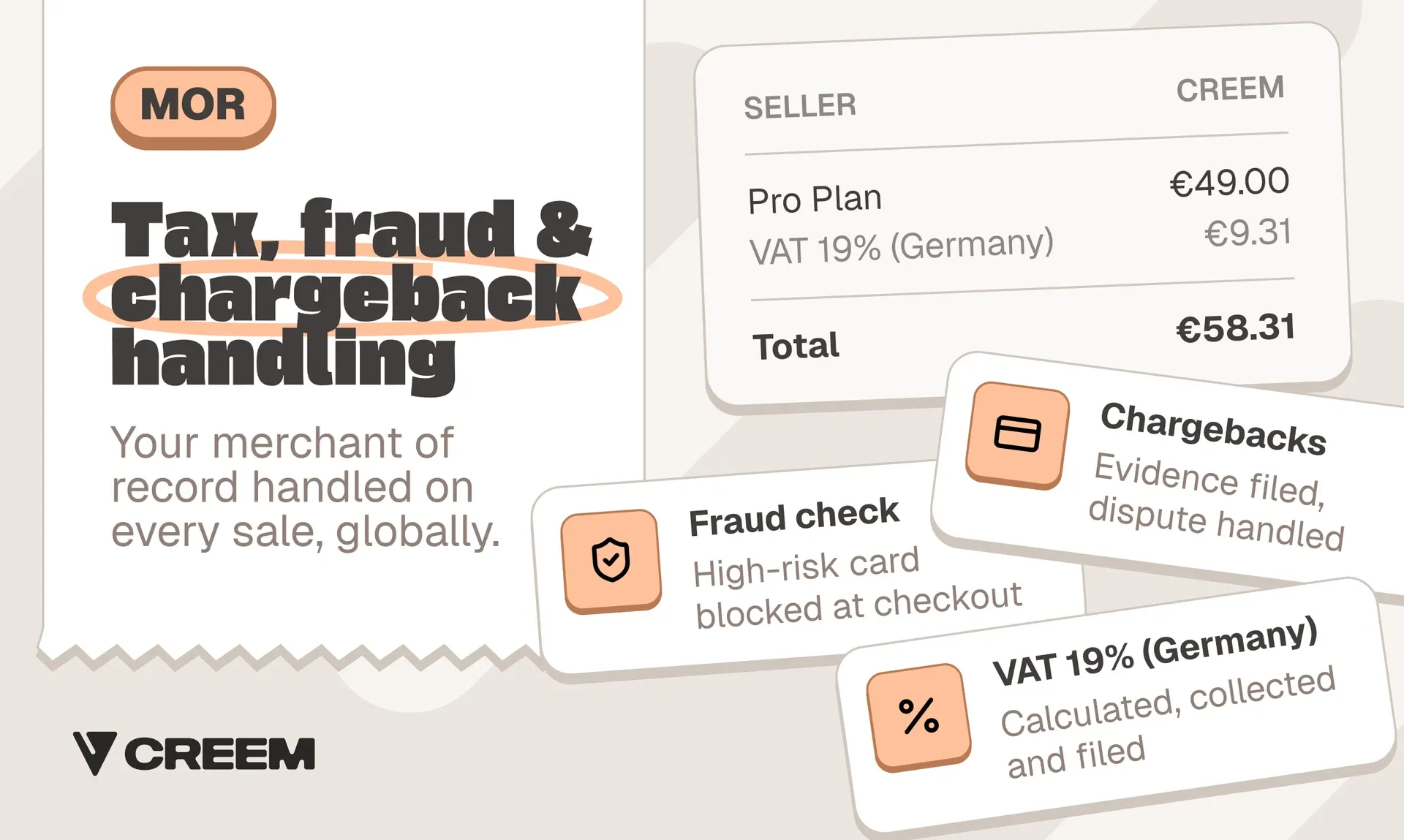
You can bill consumption through usage meters or prepaid credits with auto-refill, and Creem pays partners from the same balance.
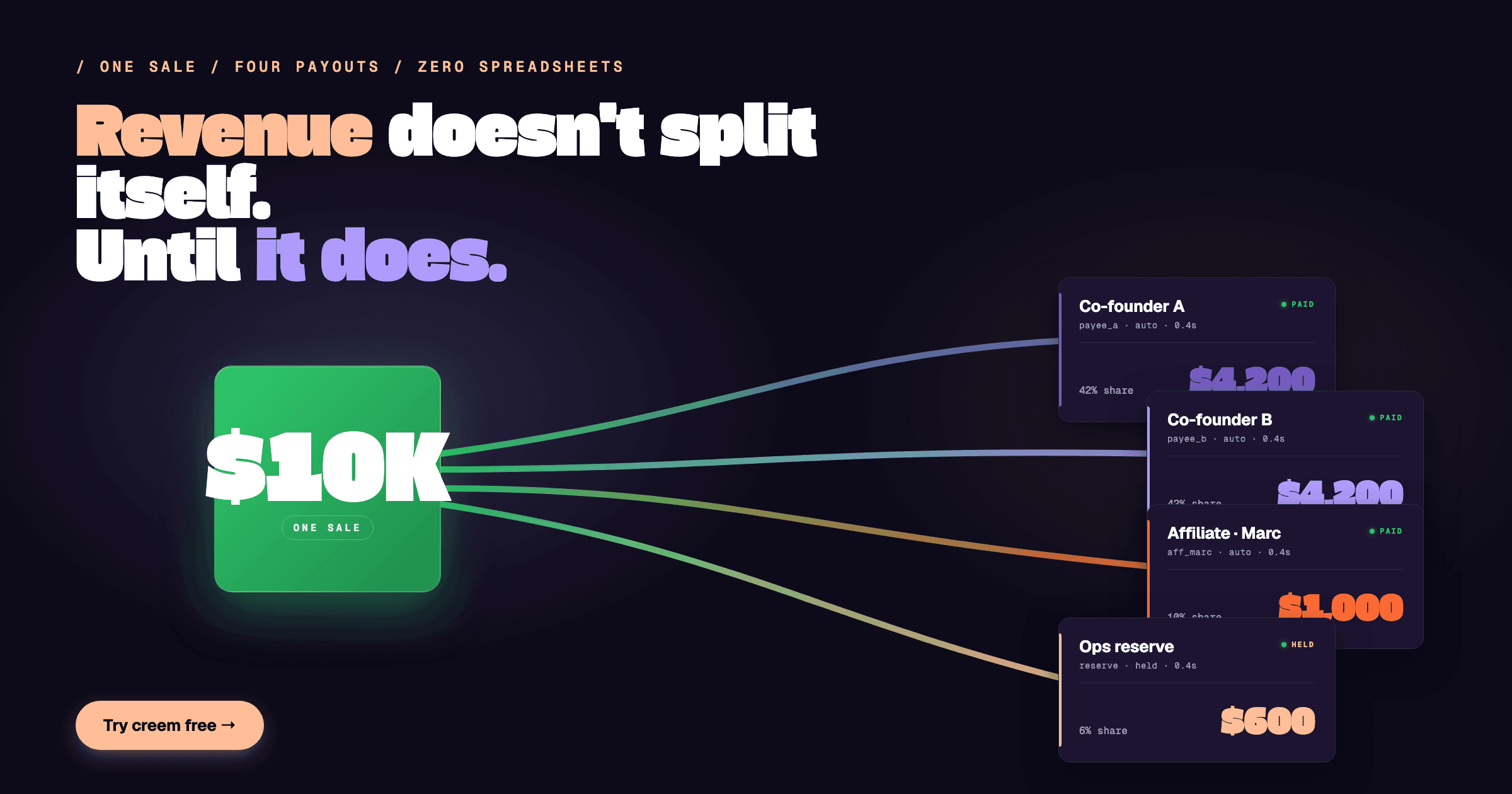
Standard-plan splits and affiliates each add 2% before commission.
DaisyUI creator Pouya Saadeghi needed 0 extra tools for his profit-sharing setup.
Creem brings global transaction tax, consumption billing and partner payments into one platform. To keep those tasks together, try Creem and add the product you want to sell.