
Open a recent invoice for a California customer and you will probably find no California tax on it. A SaaStr post this year warned that software vendors are less ready than their buyers for what changes on January 1, 2027. It called a surprise tax line on a January invoice the worst outcome.
That surprise can run in either direction. Some founders still assume California never taxes SaaS. Others assume a taxable product means they must start collecting from everyone with a California billing address. Neither assumption holds on its own.
Pick the wrong one and you either bill customers for tax you had no duty to collect or miss a CDTFA registration you owed, with returns to file once you catch it. You can work out which applies to your sales, and what to set up, before January.
Key takeaways
Before you add California tax to a subscription invoice, check your product’s tax treatment, the buyer’s location and your registration obligations. A taxable subscription alone does not mean you have to collect.
- Check your product’s tax treatment. From January 1, 2027, California taxes qualifying prewritten software delivered by download or through SaaS, alongside software on physical media.
- Identify the buyer’s California address that applies to the sale. District taxes vary by location, so that address affects the invoice rate.
- Compare qualifying California sales with the $500,000 registration threshold. From 2027, California law treats digital products as tangible personal property, so taxable software sales generally count toward it. Remote sellers must register once those sales exceed it in this year or last, and other ties to California can require registration too.
- Decide who handles the tax. File as the seller yourself, or use a merchant of record that sells to the buyer and handles collection, filing and payment.
Is software taxable in California?
The answer depends on how you deliver the software, at least until 2027. Prewritten software sold on a disk or drive is generally subject to California sales tax today, while the same program downloaded or used online generally is not because nothing physical changes hands.
That distinction ends on January 1, 2027. Downloads and SaaS for prewritten software become taxable alongside physical media, so delivery method no longer determines the tax treatment.
Is SaaS taxable in California?
Ordinary SaaS access is generally untaxed through the end of 2026 if no physical item changes hands. From 2027, prewritten SaaS becomes taxable.
The new rules exempt many digital services, but software access is not one of them. From 2027, a customer using your prewritten software through a browser or an API is buying something taxable.
Billing by seat, usage or credits does not by itself make prewritten software tax-free. Those California charges become taxable in January 2027, and your obligation to collect depends on where each sale is sourced and whether you have to register.
Downloads and other digital products
Off-the-shelf software downloaded without a disk or drive is generally untaxed today. From 2027, electronically transferred prewritten software counts as a digital product, so a downloaded license for your app becomes taxable too.
Ship a backup copy on a flash drive and the whole sale generally becomes taxable under today's rules.
Digital books, data and images delivered electronically are generally untaxed under today's rules. Before January 2027, separate the software in your catalog from the other files so you can check each product's tax treatment.
How do custom work, support and bundles change the tax?
Adding development or support does not make prewritten software tax-free. The tax treatment depends on what you write for that customer and which services they have to buy.
Software written to one customer’s order is excluded from tax, except basic operational programs. Once you hold that build for general or repeated sale, it becomes prewritten software. Record when a client build becomes a product for repeated sale so you can reassess its tax treatment.
On a taxable software invoice, the subscription line is taxed, but a separate line for qualifying custom programming done to that customer’s order can be excluded. Calling the charge “implementation” or “integration” does not make it qualify, so describe the programming work the buyer actually receives.
Consulting hours buyers must take with a taxable software maintenance plan are taxed, even on a separate invoice line. Optional, separately priced hours are excluded from the taxable maintenance charge, so offer consultation as a separate add-on the buyer can decline.
If your subscription includes mandatory implementation or support, ask a tax adviser to check the package’s treatment under the 2027 rules. Make the contract and invoice clear about what is custom programming, what is software access and which services are optional.
When is a software sale a California sale?
From 2027, a download or SaaS sale generally counts as a California sale if the purchaser’s address in your records is in California.
A buyer with a known California address can use your app even if it is hosted in another state. The sale still generally belongs to California, regardless of where the servers sit.
Hosting your website on someone else’s California server does not by itself create a place of business requiring a California seller’s permit. A server you have an ownership interest in can qualify, depending on the activities there, so ask a tax adviser to check whether you need a permit.
Export your customer address records from your billing system and flag those in California. Use that list to review which sales belong to California, then add up the qualifying sales to check the registration threshold.
Do you have to register and collect in California?
Yes, if you are a retailer “engaged in business” in California, you must register with the California Department of Tax and Fee Administration (CDTFA). That test is separate from whether your product is taxable.
Economic nexus and registration
Economic nexus requires registration based on sales, not physical presence. An out-of-state seller must register when its combined sales with related persons of tangible personal property delivered into California exceed $500,000 this year or last, and registration continues through the threshold year and the following year.
That threshold covers sales of tangible personal property. From January 1, 2027, that term includes digital products, so taxable software sales generally count toward it. CDTFA's digital-product guide says out-of-state retailers must register when they are engaged in business in California, and physical presence in California can require registration below the threshold.
Collecting, filing and remitting
Registration does not make every invoice taxable. Once you need to register, the work follows this sequence:
- Obtain the appropriate seller’s permit or Certificate of Registration–Use Tax.
- Collect applicable California tax on taxable transactions.
- Show collected use tax on the buyer’s receipt.
- Keep transaction records supporting local and district tax allocations.
- File returns reporting gross sales and qualifying deductions.
- Pay CDTFA on your assigned schedule.
Give each step a named owner on your team, because registration makes filing and payment recurring responsibilities.
When the buyer pays use tax instead
If a seller does not collect tax on taxable tangible personal property used, stored or consumed in California, the buyer owes use tax to the state instead. Your list of California invoices sent without tax shows which buyers may need to pay use tax themselves.
How much tax goes on one software invoice?
California’s statewide base rate is 7.25%. At that rate, the calculation for a taxable $1,000 annual software license charge is:
- Tax is $1,000 × 0.0725 = $72.50.
- Invoice total is $1,000 + $72.50 = $1,072.50.
That calculation leaves out applicable district taxes, which raise the combined rate in some locations. Look up the combined rate for the buyer’s California address used to source the sale, then apply it to the software charge on each invoice.
What the new rules still leave open
Before you invoice, two contract-level questions need an answer. How much of a multistate charge belongs to California, and how should you split a bundled price?
If an annual contract is billed to a California address but most users are in other states, CDTFA generally sources the whole sale to that billing address. A buyer can give you an exemption certificate for software bought solely for use outside California, so check with the buyer which part of the charge, if any, that covers.
Give your tax adviser a breakdown of users or seats by state, along with records supporting those locations, and keep the basis for the split with the contract.
A single price covering software and services needs its own analysis. Give your adviser the scope of work and the price of each part before assigning tax treatment to the combined charge.
I would get both decisions in writing before issuing the contract’s invoices. Whoever manages billing can then use that written treatment to set the tax on those invoices.
Filing yourself or using a merchant of record
The decision comes down to who is the legal seller on each sale. When you file yourself, your business stays the seller, registers with CDTFA, decides which products and invoice lines are taxable, files each return and pays on its assigned schedule.
Tax software can help, but your team still owns the responsibility for collecting and paying the right tax.
A third-party merchant of record becomes the legal seller on sales through its service, then collects, files and remits tax in the jurisdictions its agreement covers.
Sales you bill yourself remain your responsibility. Ask whose name appears as the seller on the invoice and which US states the provider collects and files in.
Compare the full cost of each path:
- Self-filing adds payment processing, tax tools, accounting support and staff time.
- A merchant of record charges transaction fees for taking on the seller role and covered tax work.
I would stick with filing yourself if someone already owns your US registrations and returns. If the next registration would make tax your job for the first time, I would hand the seller role to a merchant of record.
That handoff can start with one message, as a founder posting on Reddit found when they moved to Creem the day VAT became their problem. They messaged Creem’s CEO on X to get started.
Pick a path: file it yourself or let Creem be the seller
Creem becomes the legal seller for the software and digital products you sell through it. For sales in the jurisdictions Creem covers, it calculates sales tax, VAT and GST at checkout, then files and remits them, so those sales no longer add to the returns you file yourself.
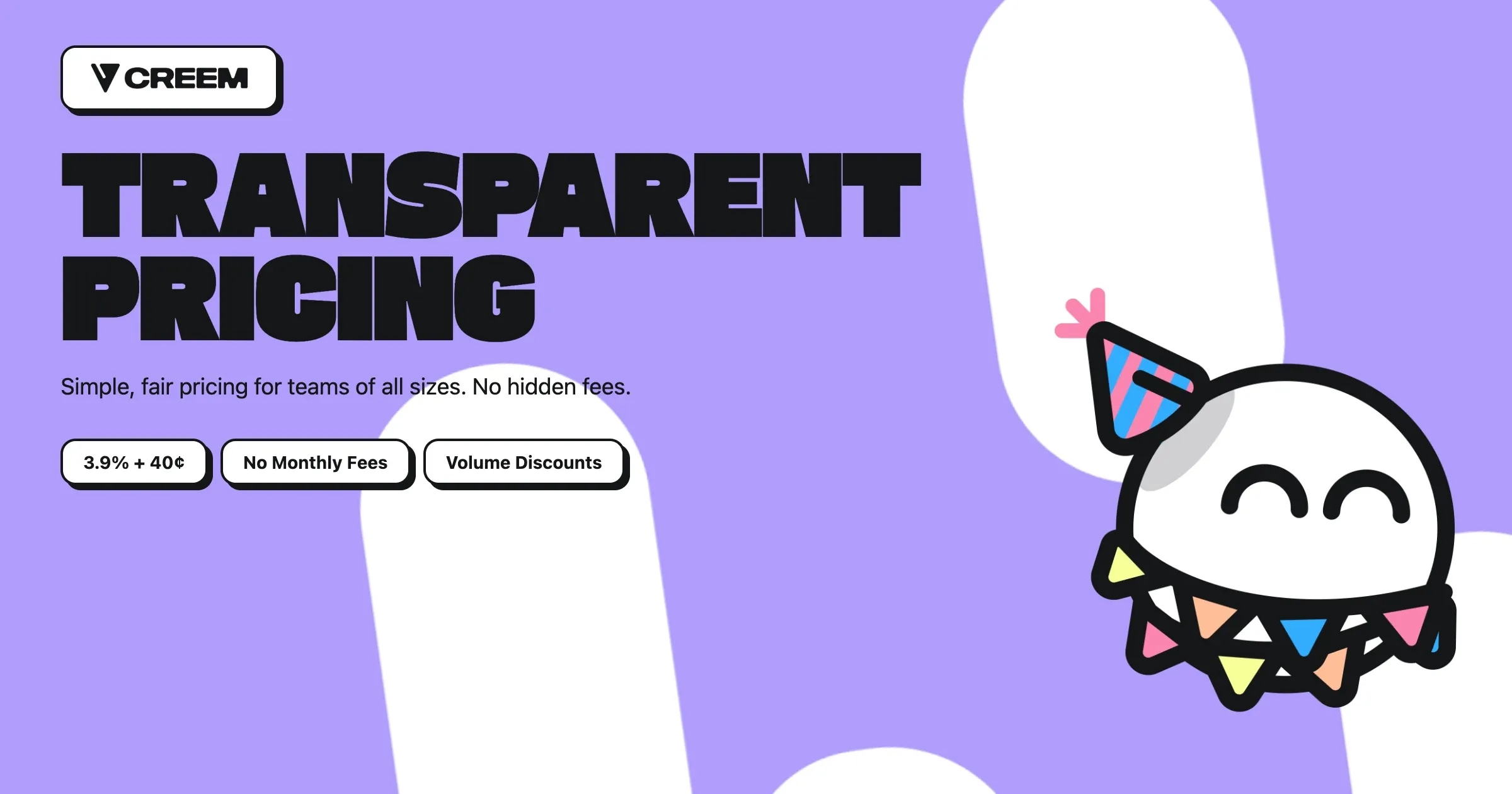
That tax work is included in the 3.9% + 40¢ fee per successful transaction, so a $100 sale leaves $95.70 after the fee, with no monthly or setup fee.
In the US, we handle sales tax in 28+ states. Ask the Creem team whether that includes California for your sales.
If you would rather not take on the next state return, try Creem and let it handle the tax on the sales you run through it.